

Article
Aquatic Therapy
💦 Come On In — The Water’s Fine! Why Aquatic Therapy Might Be Your Best Next Step
If you’ve ever stood at the edge of a workout — or a flight of stairs, or your own driveway — and thought, “There’s no way my body can do that today,” we want you to know something: you’re not alone, and you’re not out of options.
Here at HARTZ Physical Therapy, we love land-based therapy. It’s the bread and butter of what we do every day. But for some of our patients — those recovering from surgery, living with arthritis or fibromyalgia, or working through chronic back pain — the pool is where the magic happens.
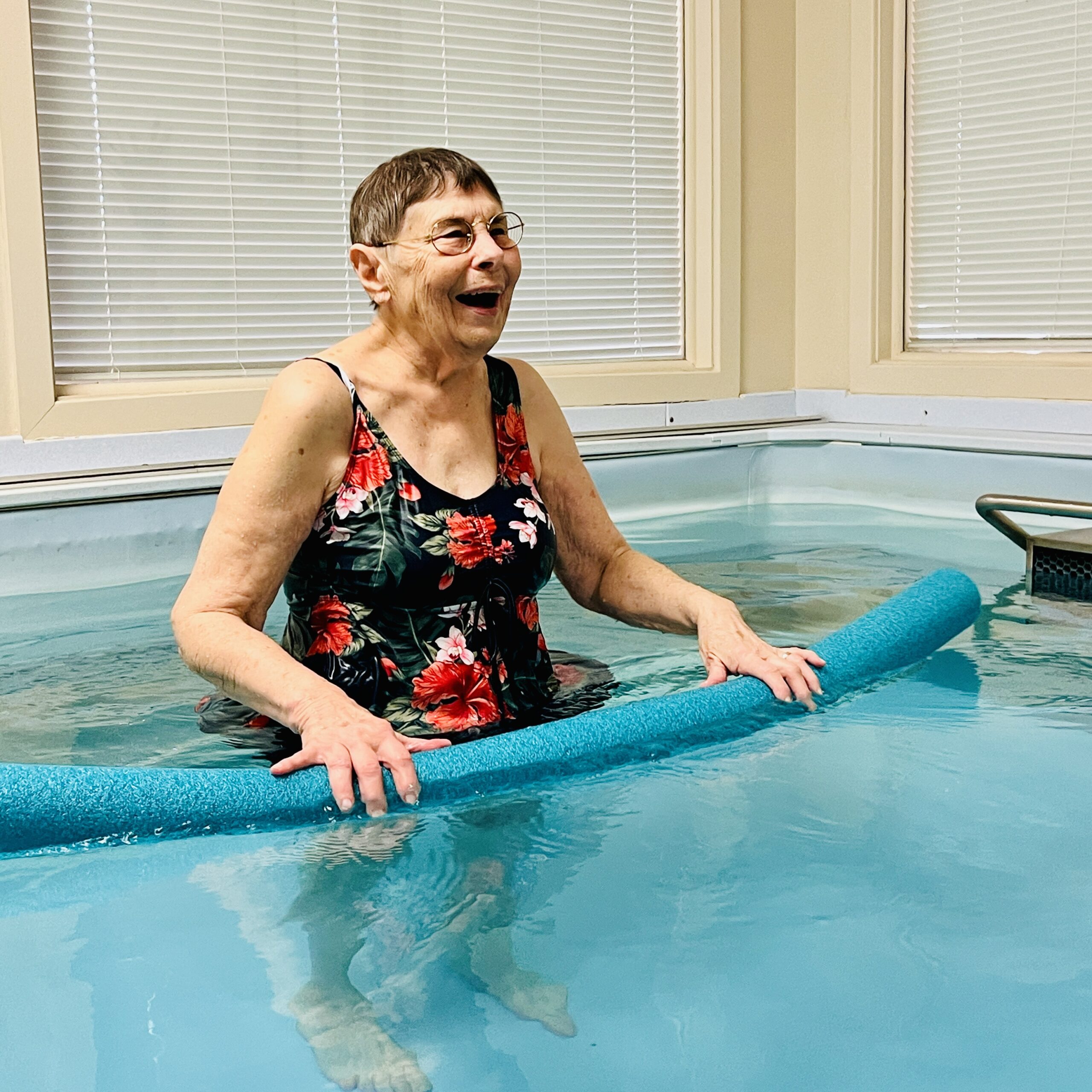
Aquatic therapy is exactly what it sounds like: one-on-one physical therapy performed in a warm-water pool with your therapist right there beside you. And the research keeps confirming what we’ve seen with our own patients for years — the water offers benefits you simply can’t replicate in the gym.
Here are four reasons your recovery might belong in the pool.
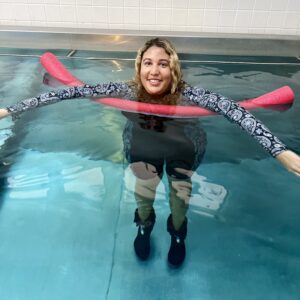 1. The Water Carries the Load (So Your Joints Don’t Have To)
Thanks to buoyancy, when you’re submerged up to your neck, you’re only supporting about 10% of your body weight. Ten percent! That achy knee or healing hip suddenly gets a well-deserved break.
But here’s the part we find most exciting: research now shows that this weightless feeling also reduces kinesiophobia — the very real fear of movement that so many chronic pain sufferers carry with them.
We see it all the time. A patient who’s terrified to squat or bend on land steps into the pool and, within minutes, is moving freely — and smiling. That confidence comes back with them onto dry land, and that’s when recovery really takes off.
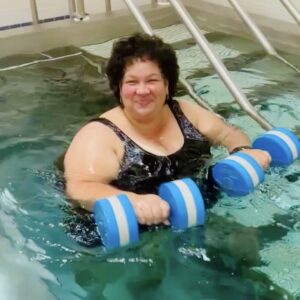 2. A Full-Body Gym, Built Right In
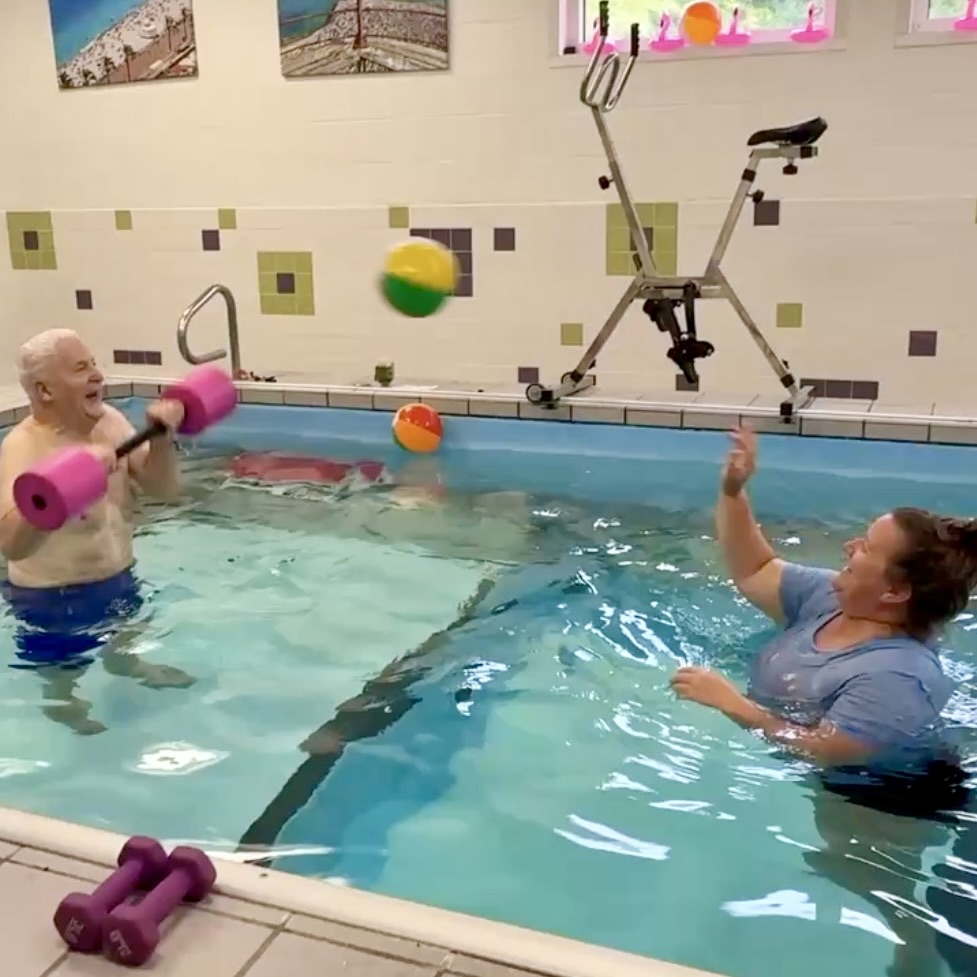
Water is about 800 times denser than air, which means every step, kick, and arm swing meets gentle, natural resistance. The pool is essentially a strength-training machine that adapts to you.
Your therapist can dial that resistance up or down just by changing the speed, direction, or size of your movements — no weights, no machines, no pounding on your joints. It’s one of the safest ways we know to rebuild strength and cardiovascular endurance, especially early in recovery.
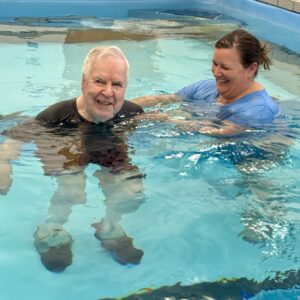 3. Nature’s Compression Sleeve
Ever notice how the water seems to gently “hug” your whole body? That’s hydrostatic pressure at work, and it’s doing more than you think.
That constant, even pressure helps reduce swelling in joints and tissues. It also gives your brain a steady stream of feedback about where your body is in space — what we call proprioception.
And here’s the best part: that improved body awareness follows you out of the pool. Aquatic therapy is now recognized as a highly effective way to improve walking patterns and significantly reduce fall risk in older adults. For our patients working on balance, that’s a game-changer.
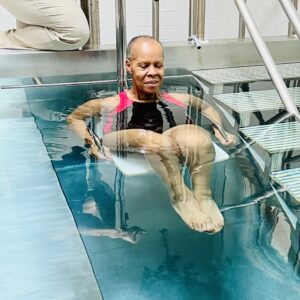 4. Warm Water, Whole-Body Benefits
There’s a reason we keep our therapy pool warm. Heat relaxes tight muscles, eases pain, and dilates blood vessels — sending more blood flow and oxygen exactly where your body needs it to heal.
But recent research tells us the benefits go even deeper. Regular warm-water therapy has been shown to improve sleep quality in people with chronic pain, and to lower rates of anxiety and depression. When you sleep better and feel better, you heal better. It’s all connected — and we treat it that way.
Ready to Dive In?
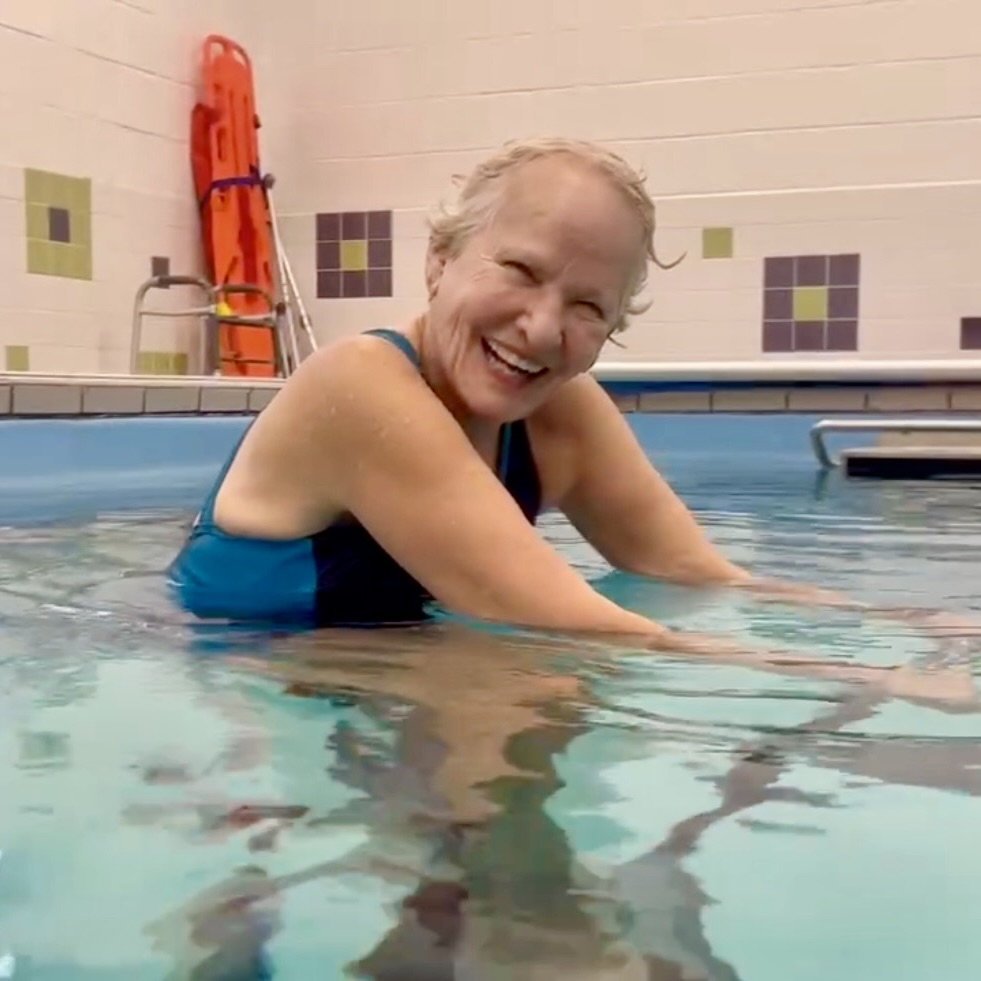
Here’s a little secret our patients discover quickly: aquatic therapy is FUN. It doesn’t feel like a chore — it feels like progress.
If land-based exercise has felt too painful or intimidating, we’d love to talk with you about whether aquatic therapy is the right fit. And thanks to Direct Access in Pennsylvania, you don’t even need a physician’s referral to get started — just give us a call.
Come experience the difference for yourself. The water’s waiting!
Lancaster East Pool: (717) 396-7766
Lancaster West Pool: (717) 735-8880
Lititz Pool: (717) 625-2228
Mount Joy Pool: (717) 492-8708
Questions? Email our Aquatics Director Wendy Enck – wenck@hartpt.com
Sources & Additional Resources
How Water-Based Exercise Is Transforming Arthritis Care – https://www.americanarthritisfoundation.org/c/treatment/b/how-water-based-exercise-is-transforming-arthritis-care
Aquatics for proprioception and gait speed in Knee OA – https://pmc.ncbi.nlm.nih.gov/articles/PMC12403502/
Aquatics for physical function and fall risk in older adults – https://pmc.ncbi.nlm.nih.gov/articles/PMC12874715/
Aquatics for balance and gait speed in stroke – https://pmc.ncbi.nlm.nih.gov/articles/PMC12988564/
Aquatics for kinesiophobia and pain-related fear – https://www.tandfonline.com/doi/full/10.1080/17581869.2026.2613633
Aquatics for sleep quality in chronic disease – https://pmc.ncbi.nlm.nih.gov/articles/PMC12985057/
Aquatics for depression, sleep, and fatigue in fibromyalgia – https://apta.confex.com/apta/csm2025/meetingapp.cgi/Paper/44347
Aquatic vs Land Based therapy for knee OA https://www.ijsat.org/papers/2024/3/1536.pdf
Efficacy of aquatics for LBP – https://pubmed.ncbi.nlm.nih.gov/34994794/
Aquatics for people with MS – https://pubmed.ncbi.nlm.nih.gov/32114368/
Aquatics for people with stroke – https://pubmed.ncbi.nlm.nih.gov/32340581/
Aquatics for Knee OA – https://pubmed.ncbi.nlm.nih.gov/35346294/
Benefits of Aquatic Therapy – https://medical.texasneurorehab.com/therapy-services/aquatic-therapy/
Who is a good candidate for aquatic PT – https://www.upmc.com/services/rehab/crs/services/aquatic-therapy
Aquatic exercises – Mayo Clinic