Written by Beth E. Kauffman, DPT, GCS, ATC, LSVT® BIG Certified
Article
Health & Wellness, Mental Health, stress, Wellness
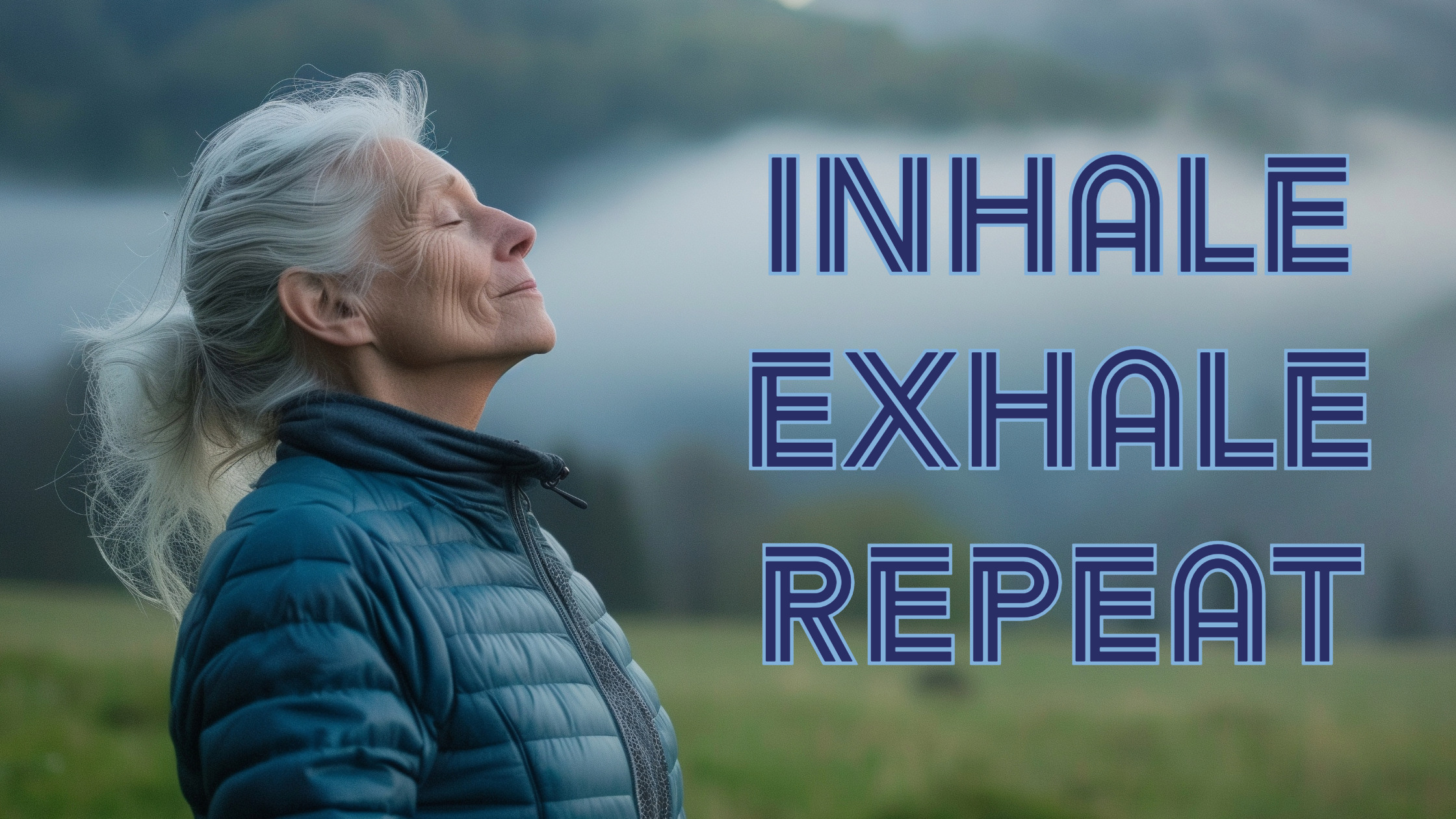
You’ve been breathing since the moment you were born—about 20,000 times a day, in fact. Yet most of us are doing it on autopilot, missing out on one of the most accessible superpowers we possess. Think of breathing as the remote control for your nervous system, and right now, you might be sitting on it without realizing you can change the channel.
The Science Bit (Don’t Worry, It’s Cool)
Here’s what’s happening every time you take a breath: Your lungs expand like balloons, your diaphragm—that dome-shaped muscle tucked under your ribs—contracts and drops down to make room, and oxygen floods into your bloodstream like tiny delivery trucks rushing fuel to every cell in your body. Meanwhile, carbon dioxide (the exhaust from your cellular engines) gets packaged up and shipped out with each exhale.
This elegant system runs 24/7 without you lifting a finger. But here’s the plot twist: you can actually hack this system to change how you feel, think, and respond to the world around you.
The Chest-Breathing Trap
Picture this: You’re stuck in traffic, late for a meeting, and your shoulders are practically kissing your ears. Without realizing it, you’ve switched to shallow, rapid chest breathing—the kind that makes your body think a lion is chasing you (even though it’s just Gary from accounting waiting for that report).
This chest-breathing pattern is your body’s emergency mode. It’s fantastic if you need to sprint away from danger, but terrible if you’re just trying to get through a Tuesday. Fast, shallow breaths activate your sympathetic nervous system—your internal alarm system—keeping you wired, anxious, and ready to fight or flee.
Now flip the script: Slow, deep breaths that engage your diaphragm are like sending your nervous system a warm hug and a cup of chamomile tea. They whisper, “Hey, we’re good here. Stand down. You can relax now.” This activates your parasympathetic nervous system—your body’s built-in chill mode.
What Breathing Exercises Can Actually Do for You
When you practice intentional breathing regularly, you’re not just “being mindful”—you’re literally rewiring your body’s stress response. The benefits stack up fast:
Mental game-changers: Lower stress and anxiety, sharper focus, clearer thinking, and better emotional regulation. It’s like giving your brain a reset button.
Physical perks: Improved sleep quality, looser muscles (especially in your neck and shoulders), more stable heart rate and blood pressure, and stronger resilience when life throws curveballs.
The investment? Zero dollars, a few minutes, and the willingness to look slightly weird if you do it in public (though honestly, most people won’t even notice).
Your New Secret Weapon: The 4-6 Breath
Ready to try something that feels almost suspiciously simple? This technique is like a gentle brake pedal for your nervous system.
Here’s how it works:
- Find a comfortable seat and let your shoulders drop away from your ears (they’ve been up there long enough).
- Close your eyes if you’d like, or soften your gaze toward the floor.
- Breathe in through your nose for a slow count of 4. Feel your belly expand like you’re filling it with air, not just your chest.
- Exhale through your mouth for 6 seconds, as if you’re blowing out birthday candles in slow motion or deflating a balloon. Let everything soften.
- Repeat this for 6–10 rounds, or about 2–3 minutes.
Why this specific pattern works: That longer exhale is the secret sauce. It stimulates your vagus nerve—a major highway of your parasympathetic nervous system—which then sends calm-down signals throughout your body. Your heart rate drops, your blood pressure eases, and your mind gets the memo that it’s safe to stop scanning for threats.
People swear by this technique before bed (hello, better sleep), during tense moments at work (goodbye, snapping at coworkers), or even in the middle of a difficult conversation when you need to stay grounded.
Make It Stick
The magic of breathing exercises isn’t in doing them perfectly once—it’s in making them a micro-habit. Try this: Link your breathing practice to something you already do every day. Morning coffee? Three minutes of 4-6 breathing. Sitting at a red light? A few rounds right there. Waiting for your computer to boot up? You know what to do.
You don’t need a meditation cushion, a special app, or a guru. You just need a few minutes and the willingness to pay attention to something you’ve been doing your whole life.
Your breath is always with you—a portable, powerful tool for feeling more calm, focused, and present. In a world that constantly demands more, faster, louder, taking a few intentional breaths might be the most rebellious act of self-care you can do.
So go ahead. Take a deep breath. You’ve got this.