
Article
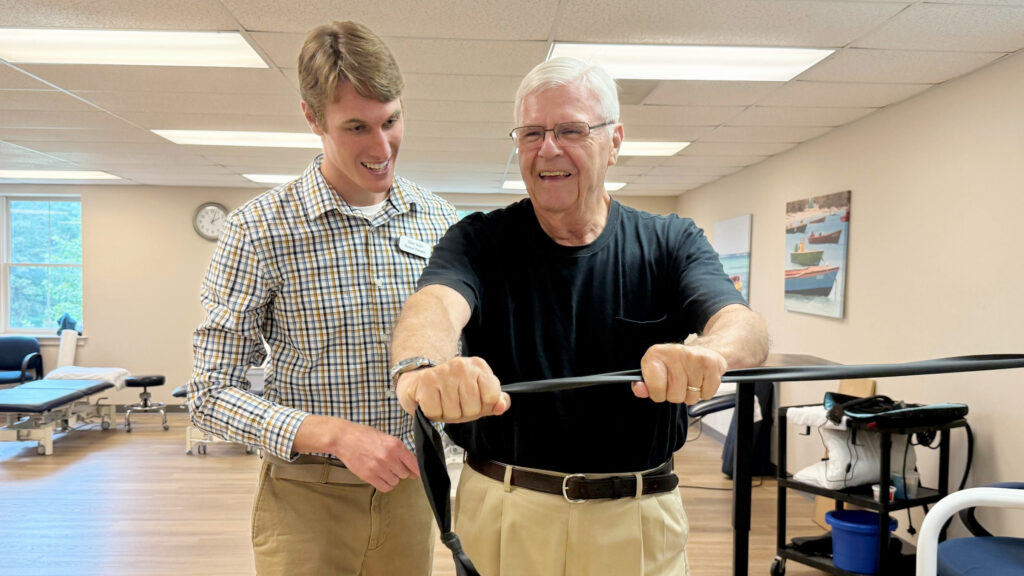
We all have our yearly checklists: the dental cleaning, the eye exam, the physical with your doctor, maybe even the race to get your taxes in on time.
But how often do we check the one thing that carries us through every single day—our movement?
Small changes in your hips, balance, or strength can sneak up on you. Maybe it’s a twinge in your back, or a stumble on the pickleball court. Often, these little signs are trying to tell you something before a bigger injury appears. That’s where an annual Physical Therapy Check-Up comes in—catching problems early so you can keep moving well, feel confident, and stay active.
What Does a PT Check-Up Look Like?
At HARTZ PT, a check-up is more than a quick assessment. We look at your health history, check your mobility, listen to your concerns, and make sure your movement supports your lifestyle goals. Your visit might include:
- Wearable Data Review: Tracking steps, VO2 max, or readiness scores on your Apple Watch, Oura, or Whoop? We’ll help translate that data into a plan that works for you.
- The Longevity Trifecta: Grip strength, balance, and power—three simple but powerful predictors of how well you’ll age.
- Movement Goals: Whether you’re training for a Hyrox event, keeping up with your grandkids, or just want to sit comfortably at your desk, we make sure your plan matches your goals.
- Customized Pre-Hab: Targeted home exercises to strengthen any weak spots and move you toward your personal goals.
Moving Well is the Ultimate Biohack
Research keeps showing that movement is more than fitness—it’s a vital sign for your whole body. Here are three simple benchmarks we love to check:
- The Sitting-Rising Test (SRT)Can you sit on the floor and get back up without using your hands or knees? This quick test is a surprisingly accurate predictor of overall health. It measures flexibility, core strength, and leg power—all in one move.
- Gait Speed – Your “Sixth Vital Sign”How fast you walk says a lot about your central nervous system and independence. Maintaining a walking speed over 1.0 meter per second can help you stay strong, independent, and out of the hospital.
- Grip StrengthYour grip is more than a handshake—it’s a window into overall muscle mass and biological age. Early changes in grip strength can be a warning sign that your muscles need some attention.
Prevention is the New Performance
In a world obsessed with longevity and optimization, the most powerful tool we have is proactive care. Think of it like maintaining your car: you wouldn’t wait for smoke to start coming from the engine before changing the oil. Your body deserves the same attention.
Ready to audit your movement and start 2026 strong? Let’s make this your year of better balance, more strength, and confident movement. Schedule your PT check-up today!
References & Further Reading
● APTA: The Annual Physical Therapy Checkup https://www.apta.org/patient-care/interventions/annual-checkup
● The Role of PT in Prevention and Health Promotion https://www.apta.org/apta-and-you/leadership-and-governance/policies/pt-role-advocacy
● Ability to sit and rise from the floor is closely correlated with all-cause mortality risk https://www.sciencedaily.com/releases/2012/12/121213085053.htm
● Gait Velocity as a Predictor of Adverse Events in Healthy Seniors https://pubmed.ncbi.nlm.nih.gov/25824103/
● Grip Strength as an Indicator of All-Cause Mortality (The PURE Study) https://www.thelancet.com/journals/lancet/article/PIIS0140-6736(14)62000-6/fulltext