
Written by Karen Talarico & Kendra Spade
Article
There are two main ways surgeons can replace a hip: from the back (posterior approach) or from the front (anterior approach). Both methods are proven and effective, and both can lead to excellent long-term outcomes.
While results are very similar by six to twelve months after surgery, the early recovery experience can feel different depending on the approach. To show what that looks like in real life, meet Kendra (Manheim) and Karen (Ephrata)—two of our Patient Care Coordinators who chose hip replacement after years of pain and took different paths to the same outcome: life without constant hip pain.
Quick Comparison of the Two Approaches:
Posterior Approach (Back)
- Where the cut is made: Back of the hip/buttock
- Muscles: Some muscles are cut and later reattached
- Early recovery: Slower at first because muscles need to heal
- Movement restrictions: Several rules (no crossing legs, no bending past 90°)
- Dislocation risk: Slightly higher
- Main risks: Early dislocation; rare sciatic nerve issues
Anterior Approach (Front)
- Where the cut is made: Front of the hip/groin
- Muscles: Muscles are moved aside, not cut
- Early Recovery: Often quicker in the first 2–4 weeks
- Movement restrictions: Very few restrictions
- Dislocation risk: Lower
- Main risks: Thigh numbness; wound problems in heavier patients
Karen’s Journey: The Quick Turnaround Anterior Hip Replacement
Age: 58
Hospital Stay: 1 night
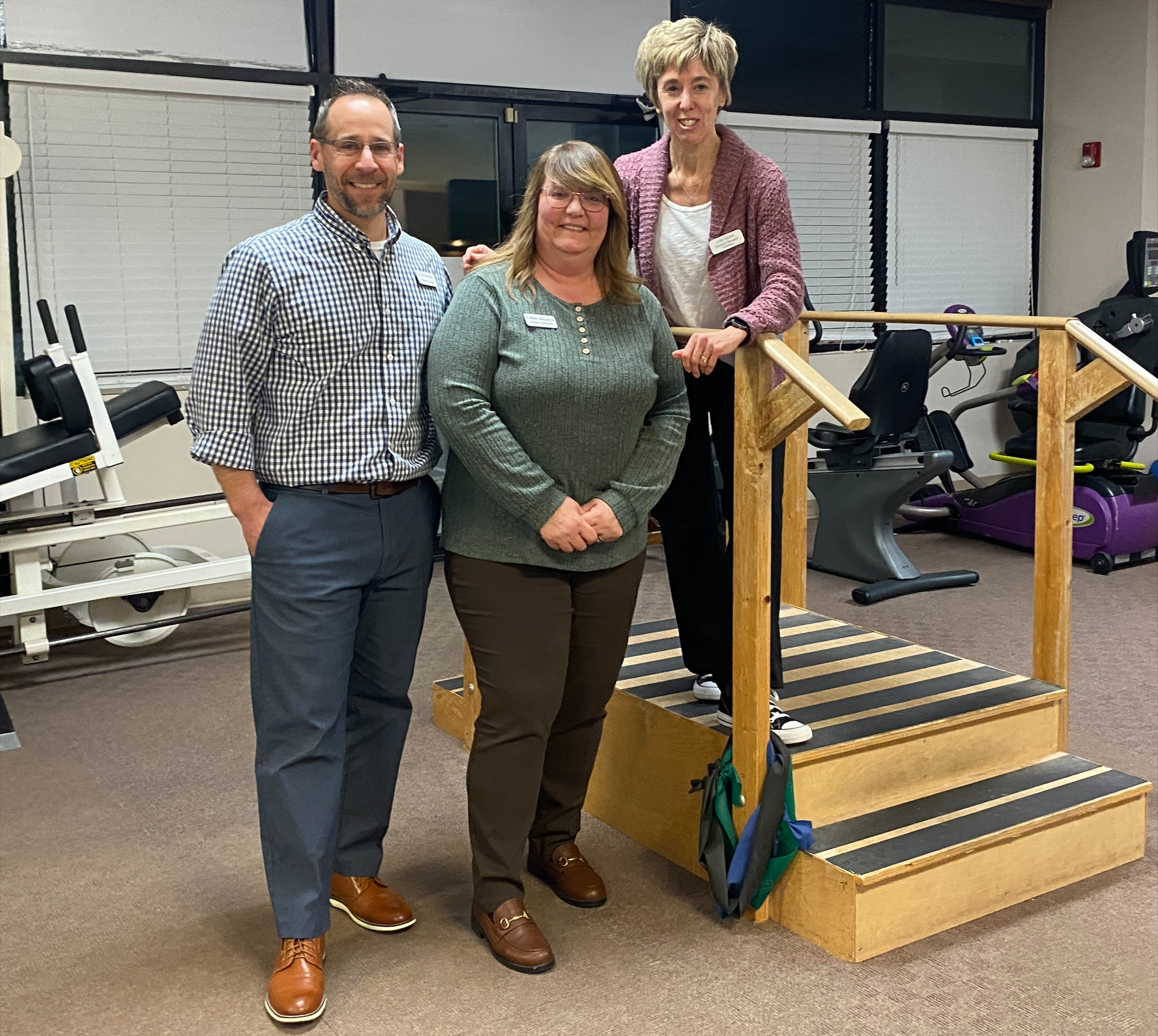
Dave, Karen & Lori (Ephrata Office)
Pain & Early Recovery
“I used prescription pain medication for about two weeks, then switched to Tylenol PM. I iced regularly—especially after exercising. For the first two weeks, my main restriction was avoiding bending my leg backward. I used a walker only for a few days, then a cane for about two to three weeks.”
Physical Therapy & Exercises
“The exercises we worked on in PT helped me regain strength, balance, and confidence.”
My program included:
- Bridges
- Seated knee extensions
- Standing and side-lying hip abduction
- Squats and sit-to-stand exercises
- Side stepping with TheraBands®
- We also worked on balance, including a balance board, which quickly became my favorite exercise.
“Straight leg raises were the hardest exercise for me and took the longest to achieve.”
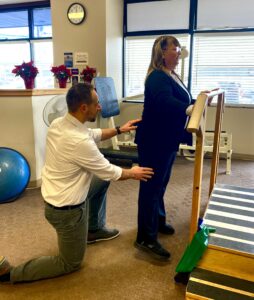
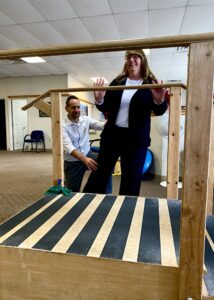
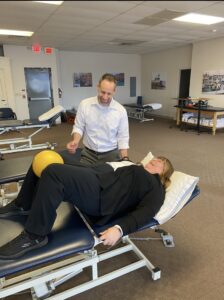
Stretching Changed Everything
“What really made a difference was the stretching done in PT. It helped relieve stiffness and improve my range of motion. While it sometimes left me sore, it was a good soreness—and icing afterward felt great.”
Consistency Was the Key
“I owe my quick recovery to being very consistent with PT—both at home and in the office. The steady progressions each week made therapy not only necessary, but very tolerable. When my second hip replacement was scheduled, I didn’t hesitate to set up PT immediately
“Without physical therapy, I know my recovery would have taken much longer, and I don’t think I would have gotten as much of my range of motion back.”
Kendra’s Journey: The Steady Climb Posterior Hip Replacement
Age: 50
Hospital Stay: 1 night
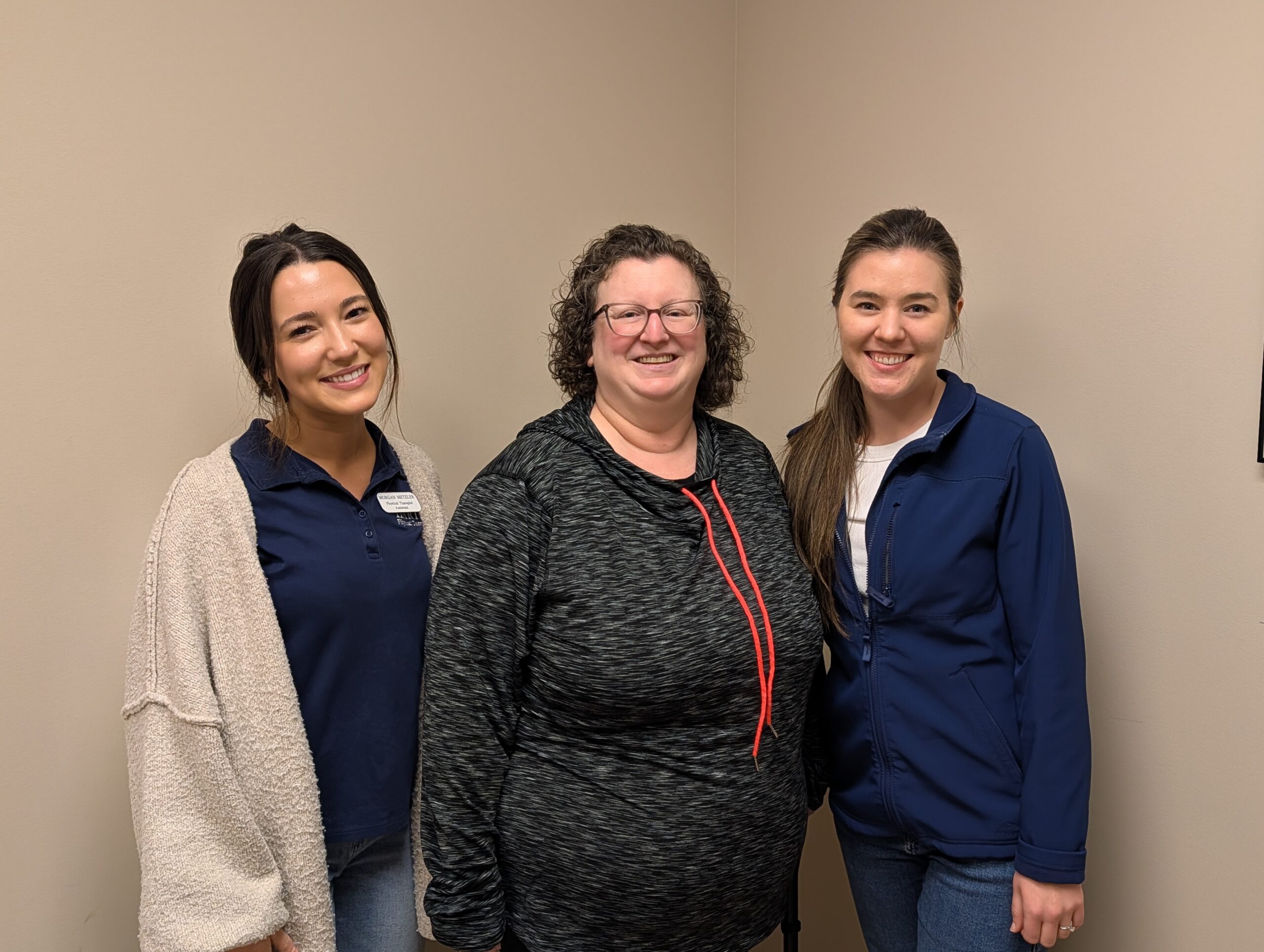
Morgan, Kendra & MacKenzie (Lititz office)
Pain, Restrictions & Early Recovery
“For the first several weeks, I had to be very careful with my movements. I couldn’t bend forward, cross my legs, or bend my hip past 90 degrees. Even getting in and out of bed or the car took planning.”
I used prescription pain medication for about two weeks before switching to Tylenol PM. Ice became my best friend. I slept in a recliner for the first ten days and used a walker for six weeks before transitioning to a cane.
Starting Physical Therapy
“I started outpatient physical therapy just three days after surgery. It was comforting to know that a skilled, professionally trained physical therapist knew exactly what movements were safe and effective for me.”
Before officially starting PT, I was given simple exercises to do at home:
- Heel slides
- Bent knee fallouts
- Gentle movements to keep the hip from getting stiff
- The gentle massage and stretching they did early on felt wonderful and helped calm a lot of my initial soreness.
Building Strength & Movement
“Within a week, we started standing and weight-bearing exercises and began working on building the muscles around my new hip.”
We worked on:
- Sit-to-stand exercises
- Bridges
- Gait training to retrain my legs to take normal steps again after walking with a limp for so long
One of my biggest milestones was getting on the stationary bike and completing a full pedal rotation for five minutes—that was a huge win.
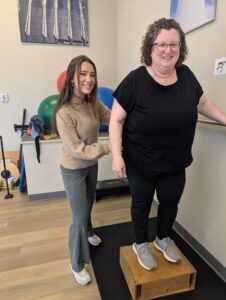
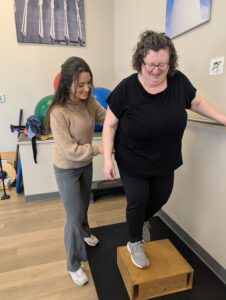
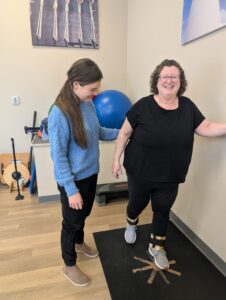
Progressing Toward Independence
As I got stronger, therapy became more challenging:
- Transitioning from a walker to a cane
- Adding bands, weights, and more repetitions
- Walking drills like side stepping, marching, and backward walking
- Little by little, I relied less on holding onto tables or bars.
- Eventually, we moved into balance work and stair training.
- I’m now working toward walking without a cane and know that milestone is very close.
Why PT Made the Difference
“I was given a home exercise program from the very beginning with pictures, instructions, and clear guidelines. As I progressed, it was updated to keep challenging me. I quickly realized that the work I did at home was just as important as my PT sessions. It’s hard to make progress with only two one-hour visits per week.”
“It gave me peace of mind knowing my physical therapist developed a program specifically tailored to me and my recovery. My recovery would not have been as smooth without consistent physical therapy.
The Common Ground
Kendra and Karen had different surgeries and very different recovery speeds—but their takeaways were the same.
- Hip replacement gave them their lives back
- Clear communication with their surgeon mattered
- Consistent, individualized physical therapy made the difference
- Physical therapy isn’t just about exercises. It’s about guidance, reassurance, progression, and rebuilding trust in your body.
- Whether recovery feels slow and steady or fast and efficient, staying engaged with PT helps set patients up for the best possible outcome.
Today, both women are back to enjoying life—without the pain that once limited them—and with a deep appreciation for the PT team who supported them through recovery and who also happen to be their coworkers.