

Written by Josh Varner, DPT
Article
Hands-on, Not Hands-off: Understanding the Manual Component of Physical Therapy
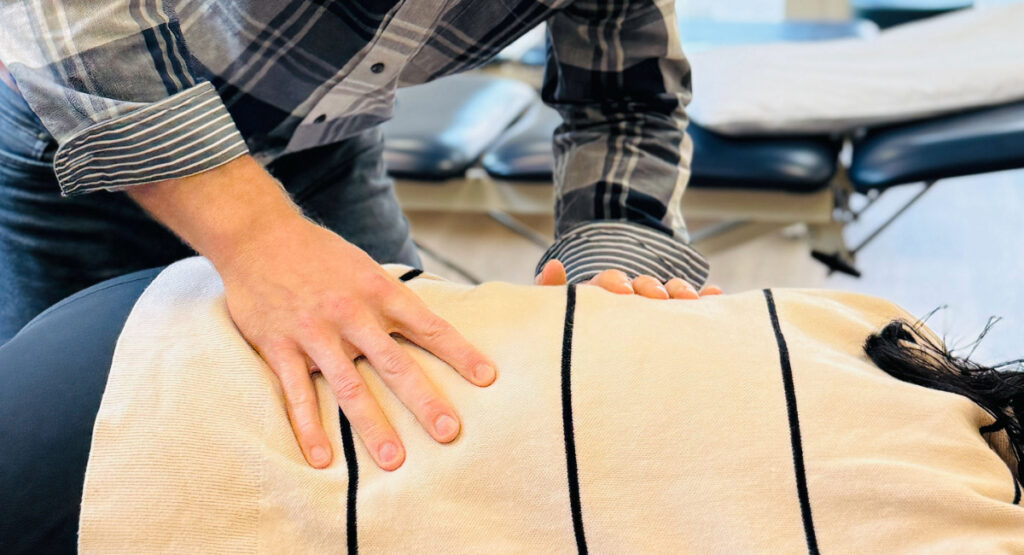 While your therapist at PT most likely doesn’t have magical abilities, the relief you feel after the hands-on part of treatment can make it seem that way. Manual therapy is a vital part of both the evaluation and treatment process in outpatient physical therapy, and it can include soft tissue massage, joint mobilizations, passive range of motion, stretching, muscle energy techniques, and traction. During an evaluation, these hands-on techniques let your therapist assess how your tissue feels and moves, how freely your joints glide, how elastic your muscles are, where you’re tender to the touch, and any movement restrictions that a general exam might miss. What your therapist learns by hand helps pinpoint impairments and get closer to a root cause. Paired with functional movement testing, it’s how your therapist builds a plan of care that fits you specifically.
Manual therapy can help:
- Loosen that stubborn knot between your shoulder blades
- Improve how far your neck rotates to check for oncoming traffic
- Relieve low back pain, from current injuries to chronic concerns
- Decrease tension in your jaw
- Ease shoulder pain by improving upper back mobility
- Lessen the frequency and intensity of tension-type and neck-related headaches
- Reduce post-surgical stiffness and restrictions
- Make navigating stairs easier
- Speed your return to the activities you care about
Why hands-on work makes your exercises work better
Manual therapy works best as preparation — it gets your body ready for the therapeutic exercise and functional activities that drive lasting results. Soft tissue massage eases muscle tension to improve mobility and reduce pain. Joint mobilizations reach deeper restrictions, gently moving a stiff joint through motions you can’t easily do on your own. Passive range of motion and stretching help maintain or improve flexibility when active movement is still limited and – you’ll often feel the benefit right away. There’s also a quieter effect: knowing that a trained professional understands when and how to use these techniques safely builds a sense of trust that helps you relax and get more out of the session.
As valuable as hands-on work is, it delivers the most when it’s paired with the active parts of PT — strengthening, neuromuscular re-education, balance training, and functional exercise. The gains in range of motion, looser muscles, and reduced pain are what let you participate more fully: you can work into the new motion, add weight, and move more comfortably because of the hands-on work that came first.
Tracking your progress, visit to visit
In an outpatient setting, manual therapy does more than provide immediate relief. Each session gives your therapist a fresh read on how your tissue tone, range of motion, pain response, and joint mobility have changed since the last visit. That feedback is what lets your therapist adjust your plan to keep supporting better movement, function, and progress toward your goals.
Whatever brought you to PT, a trained therapist can put manual therapy to work for you — during your evaluation and throughout your care. If you’re already in PT, ask your therapist whether hands-on work fits your plan. And if you’re not yet, reach out and bring the complaint that’s been slowing you down. Come experience the impact that hands-on treatment can have for you.