
Written by Justin Seekins, DPT
Article
GLP-1, Health & Wellness, muscle loss, weight, weight loss
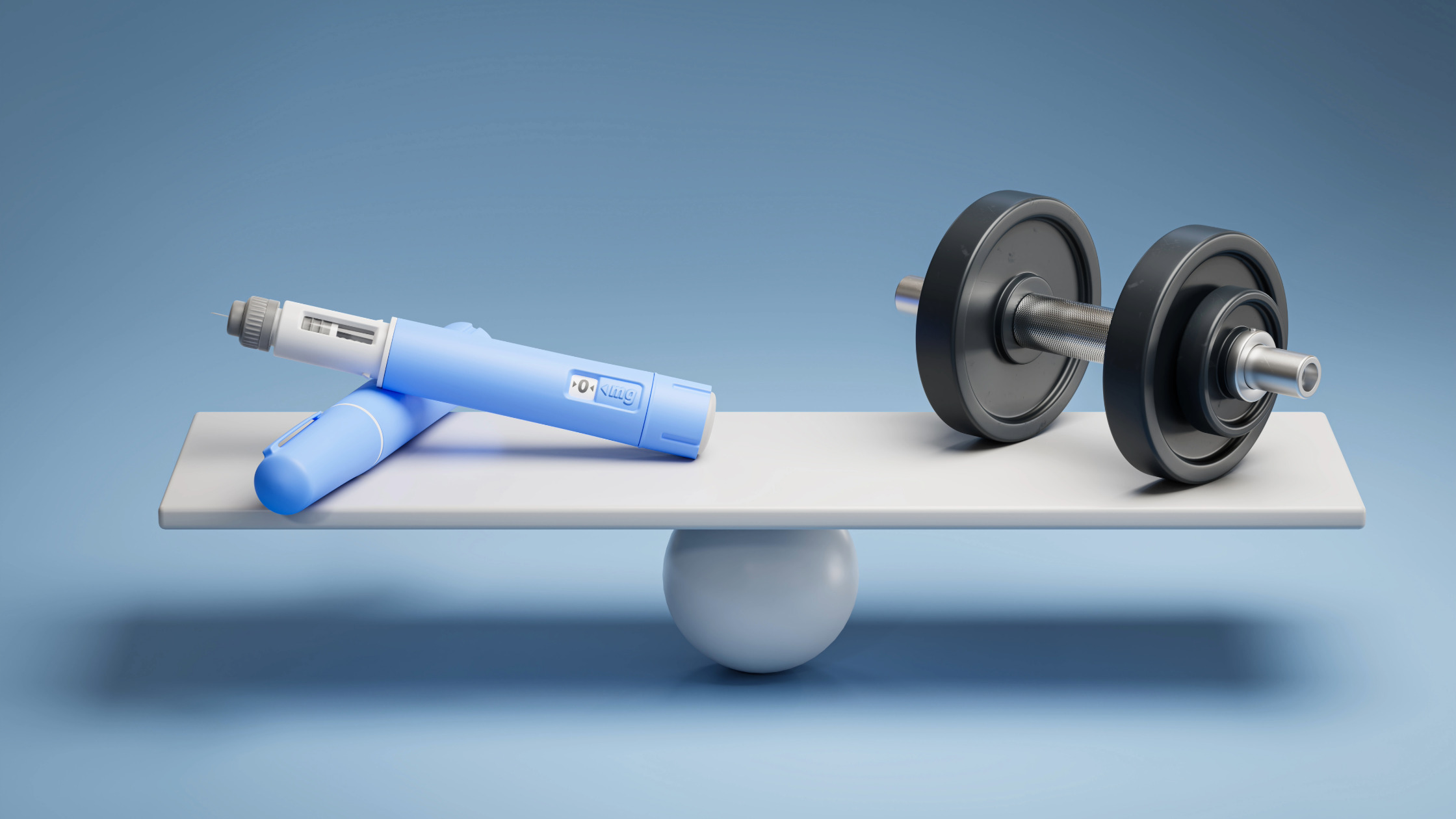
GLP-1 Medications Have Side Effects. Physical Therapy Can Help.
If you’re experiencing Ozempic side effects like muscle loss or fatigue, you’re not alone — and you don’t have to just push through them. Many GLP-1 users are losing more than just weight, and physical therapy can help you protect what matters most. Are you taking a GLP-1 medication like Ozempic and losing more than just weight? Maybe you’ve noticed muscle loss, or fatigue that’s making it hard to focus at work or keep up at home. Or maybe you’ve stopped the medication and you’re looking for a sustainable way to keep moving forward. If any of that sounds familiar, physical therapy might be exactly what you need.
GLP-1 medications have been a game-changer for a lot of people. Many users describe how the constant mental chatter around food — often called “food noise” — quiets down on the drug, making it easier to build healthier habits and feel genuinely satisfied after meals. The weight comes off. For many, it’s results they’d only dreamed about.
But for some GLP-1 users, the scale isn’t the only thing changing. Muscles, bones, and tendons can be affected too. When the body isn’t getting enough nutrients from food, it starts breaking down its own tissue for energy — a process called catabolism. If that’s happening to you, it’s worth having a conversation with your doctor about adding physical therapy to your care team. A nutritionist or dietician can also be a valuable partner in making sure your body is getting what it needs.
How Physical Therapy Can Help
Managing Ozempic Side Effects with Physical Therapy Research shows GLP-1 medications are most effective when paired with regular exercise and a balanced diet. Physical therapists are movement experts — we meet you where you are, whether you’re just getting started or working to stay active through the process. We can help you build a safe exercise plan, manage expectations, and reduce your risk of injury along the way.
Getting started is simple The good news? In Pennsylvania, you don’t need a doctor’s referral to see a physical therapist. You can call us directly and get started. At your first visit, your physical therapist will do a thorough evaluation with your full GLP-1 journey in mind. From there, they’ll listen to your goals, establish a baseline using physical tests and measures, design exercises that target your specific needs, and serve as a resource for activity modifications as things change along the way.
Dealing with muscle loss Muscle loss during GLP-1 use is well-documented. A physical therapist can measure and track your progress, and prescribe targeted exercises that signal the body to preserve muscle rather than break it down for energy. Paired with guidance from a nutritionist, this combination gives your body the best chance of holding onto muscle while still losing weight.
Managing fatigue Excessive fatigue is a real challenge for some GLP-1 users — and physical therapy can work around it. Your therapist can adjust the pace and intensity to match your energy levels on any given day, using simple exercises to keep muscles active and prevent atrophy. Options like aquatic therapy or position-friendly exercises can be particularly helpful. And even on the tough days, your therapist will track your progress even when you can’t feel it yet, giving you that encouragement to keep going.
Stopping or weaning off the medication Coming off a GLP-1 medication is its own transition. Your body may look and move very differently than it did before, and that adjustment takes time. A physical therapist can help you rebuild strength, maintain muscle mass, and navigate changes in balance, endurance, and pain that you might not have anticipated.
Making lifestyle changes stick Change opens up new possibilities — and new questions about how to move forward. If you were previously carrying extra weight, there’s actually a 90% chance you have a musculoskeletal condition that’s been part of your history. A physical therapist can work alongside your broader care team to help you figure out what exercise is right for you, prevent injury as your body changes, and step confidently into this new chapter.
Avoiding the rebound One of the real concerns with stopping a GLP-1 medication is that old habits can creep back in. Starting physical therapy while you’re still weaning gives you a built-in support system. Your therapist will help you build a personalized training plan, adjust as your energy shifts, and guide your full return to the activities you love — whether that’s running, lifting, hiking, or anything else on your list.
A Bigger Picture
An estimated 140 million Americans meet the clinical criteria for GLP-1 use, and roughly 1 in 8 Americans has taken one of these medications. Their popularity has grown rapidly over the past five years — and for good reason. Beyond weight loss, users have seen improvements in blood pressure, cholesterol, and cardiovascular risk. These medications aren’t going anywhere.
But here’s the thing: GLP-1 drugs work by slowing gastric emptying, which means your body is essentially in a caloric deficit without the hunger signals telling you. Your body still needs nutrients, and it will find them — sometimes by breaking down your own muscle and bone tissue. The benefits are real, but so is the “body tax.” The longer someone is on a GLP-1 medication, the more valuable it becomes to have a doctor, physical therapist, and nutritionist working together as a team.
What to Do Next
Change is hard. And this kind of change — the kind that affects how you feel in your own body every single day — deserves real support. At HARTZ PT, we’d love to be part of your team. Give us a call at any of our six Lancaster County locations. In Pennsylvania, you can come straight to us — no referral needed with Direct Access. We’ll start where you are, and we’ll figure out the rest together.
Common GLP-1 Medications: Dulaglutide (Trulicity) · Liraglutide (Victoza, Saxenda) · Semaglutide (Ozempic, Rybelsus, Wegovy) · Tirzepatide (Mounjaro, Zepbound)
References:
1: Julie Mulcahy, Anna DeLaRosby, Todd Norwood, Transforming Care: Implications of Glucagon Like Peptide-1 Receptor Agonists on Physical Therapist Practice, Physical Therapy, Volume 105, Issue 6, June 2025, pzaf061, https://doi.org/10.1093/ptj/pzaf061