
Written by Beth Witsik, Marketing Director
Article
 Empowering Your Comeback After Hip Replacement
If you’re reading this, you’ve likely taken a brave step toward reclaiming your mobility and living without constant hip pain. Total hip replacement surgery is a major decision, and congratulations on taking charge of your health! But here’s something important to know: the surgery is just the beginning of your journey. Physical therapy is where the real transformation happens.
Why Physical Therapy Is Your Best Partner in Recovery
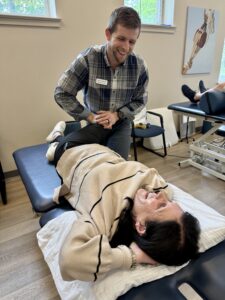 Think of your physical therapist as your personal recovery coach. After surgery, your body needs guidance to heal properly and learn how to work with your new joint. You wouldn’t try to run a marathon without training, right? The same goes for recovering from hip replacement. Physical therapy gives you the tools, support, and encouragement you need every step of the way.
The Life-Changing Benefits You’ll Experience
Get Back on Your Feet Faster (With Less Pain!)
Nobody enjoys being sidelined, and physical therapy helps you get moving again sooner. Your therapist will use gentle exercises and hands-on techniques that actually help reduce pain while promoting healing. Many patients are surprised by how much better they feel when they stay active with proper guidance. Plus, you may find yourself needing fewer pain medications as you progress.
Rediscover Movement You Thought You’d Lost
Remember when you could walk without thinking about every step? Physical therapy helps you get there again. Your therapist will work with you on exercises that gradually restore your hip’s flexibility and range of motion. Before you know it, those everyday activities—walking around the neighborhood, playing with grandchildren, or simply getting out of bed without wincing—will feel natural again.
Build Strength That Supports Your New Beginning
Surgery takes a toll on your muscles, especially around your hip and legs. Physical therapy rebuilds that strength with exercises tailored just for you. As your muscles get stronger, you’ll notice better balance, more confidence in your movements, and a reduced risk of falling. You’re not just recovering—you’re becoming stronger than you’ve been in years.
Stay Safe and Avoid Setbacks
Your physical therapist is like a guardian angel for your recovery. They’ll teach you how to move safely, spot any potential issues early, and help you avoid complications like hip dislocation or blood clots. Having someone in your corner who knows exactly what to watch for brings incredible peace of mind during this vulnerable time.
Get a Recovery Plan Made Just for You
You’re unique, and your recovery should be too. Your physical therapist will consider everything about you—your age, lifestyle, goals, and how you’re feeling each day. Maybe you’re eager to get back to gardening, or perhaps you just want to walk comfortably again. Whatever your dreams are, your therapist will help you work toward them at a pace that’s right for you.
Gain Confidence Along with Mobility
Let’s be honest: recovering from surgery can feel overwhelming. Will you ever feel normal again? Can you trust your new hip? Physical therapy addresses these fears head-on. Your therapist will be there to encourage you, celebrate your progress, and teach you how to move without fear. That emotional support is just as healing as the exercises themselves.
Your Recovery Journey: What It Really Looks Like
You’ll likely start physical therapy within a day of your surgery—yes, that quickly! Don’t worry, though. At first, it’s simple things like sitting up, standing with support, and taking small steps. Your therapist will be right there with you, making sure you feel safe and comfortable.
As days turn into weeks, you’ll be amazed at what you can do. The exercises become more interesting and challenging in a good way. Most people continue therapy for a couple of months, but everyone’s timeline is different. The secret ingredient? Doing your home exercises between sessions. Think of it as investing a little time each day in your future freedom.
Real Stories from Our Own Team
We practice what we preach! Recently, two of our own staff members underwent total hip replacement surgery, and we had the privilege of guiding them through their recovery. Watching their transformation has been nothing short of inspiring.
Both came to us right after surgery, understandably nervous about the road ahead. But week by week, we saw them grow stronger and more confident. Today, they’re not just back to work—they’re thriving! They’re walking without pain, keeping up with their families, and doing activities they hadn’t been able to enjoy in years.
“After my first hip replacement, I started physical therapy not really knowing what to expect even though I work here! Honestly, I was nervous about hurting my new hip. But pretty quickly, I realized PT was helping strengthen the muscles around it, and my flexibility started improving. Even though I still needed my other hip replaced, I noticed big gains in my range of motion—results I know I wouldn’t have gotten without PT.
After my second hip replacement seven months later, therapy took my recovery to the next level. My strength improved, my mobility came back, and I could return to my daily activities pain-free. The team made sure I was doing every hip-focused exercise the right way so I could get back to doing the things I love.” Karen Talarico, Patient Care Coordinator, Ephrata
The surgery changed my life—but physical therapy made all the difference. It sped up my recovery, reduced my pain, increased my flexibility and strength, and helped me feel like me again.” Karen Talarico, Patient Care Coordinator, Ephrata
What made the difference? Their commitment to showing up, doing the work, and trusting the process. They’re living proof that with the right guidance and dedication, hip replacement recovery can truly give you your life back. If our own team members trust physical therapy for their recovery, that should tell you something!
“I’m grateful for Kenzie and Morgan’s expertise and the individualized plan they developed for my hip replacement recovery. Their guidance in progressing my exercises safely and effectively has helped restore my strength and range of motion. I truly couldn’t imagine recovering without the support of skilled physical therapy.” Kendra Spade, Patient Care Coordinator, Manheim
You’ve Got This
So, we’ve given you the facts. Here’s the truth: physical therapy after hip replacement isn’t just helpful—it’s your pathway to the life you want. The patients who embrace their therapy and stay committed to the process are the ones who achieve remarkable results. Yes, there will be challenging days, but there will also be breakthrough moments when you realize just how far you’ve come.
If you’re about to have surgery or you’re in the early stages of recovery, know this: you don’t have to do this alone. Your physical therapist will be your guide, your cheerleader, and your expert advisor all rolled into one. Together, you’ll work toward getting you back to doing what you love—whether that’s traveling, dancing, hiking, or simply living without pain.
Your journey to a better, more mobile life starts with physical therapy. You’ve already shown courage by choosing surgery. Now it’s time to show up for yourself in recovery. You deserve to feel strong, confident, and free to move again. And with dedication to your physical therapy, that’s exactly where you’re headed.
Evidence Supporting Physical Therapy After Total Hip Replacement
BMC Musculoskeletal Disorders (2022): A longitudinal study from the Leiden Orthopaedics Outcomes of Osteoarthritis Study (LOAS) found that postoperative physical therapy significantly enhances recovery after total hip or knee arthroplasty. Patients who attended PT showed improved mobility and pain management compared to those who did not.
https://bmcmusculoskeletdisord.biomedcentral.com/articles/10.1186/s12891-022-05429-z
Cleveland Clinic Outcomes Report (2021–2022): In a cohort of 2,304 patients who underwent total hip arthroplasty, patient-reported outcomes were notably better among those who followed structured rehabilitation protocols, which included physical therapy.
https://my.clevelandclinic.org/departments/orthopaedics-rheumatology/outcomes/636-total-hip-arthroplasty
Southern New Hampshire Health (2025): This clinical overview emphasizes thatphysical therapy is essential for restoring movement, building strength, and ensuring the longevity of the hip implant. Therapy typically begins within 24 hours post-surgery and continues through outpatient sessions.
https://www.snhhealth.org/about-us/about-snhh/news-and-articles/hipknee-replacement-who-should-have-it-what-it-and-when-get-one-podcast
Ohio State University Clinical Practice Guidelines (2022): Their updated post-op guideline for total hip arthroplasty recommends early and sustained physical therapy to reduce complications like dislocation and to promote functional independence.