

Written by Beth Witsik, Marketing Director
Article
Physical Therapy, post-surgical recovery, surgery

You Might Not Need That Operation
A lot of people are bracing for surgery they may never need. Here’s what the research says about trying PT first.
I’ll be honest with you: I’m not a physical therapist. I handle the marketing here at HARTZ PT. But I’ve got a front-row seat, and I see the same thing play out just about every week.
Someone walks in scared. A doctor said the word “surgery,” and now they’re bracing for it. Then they spend a few weeks with one of our therapists — and a lot of the time, they walk out moving better than they have in years. No operation. No months of recovery. Just the right exercises, done the right way, with someone who actually knows their name.
That’s not magic. It’s what the research has been saying for a long time. So before you book surgery, I want you to see it too.
Torn meniscus? About 7 in 10 people skipped surgery
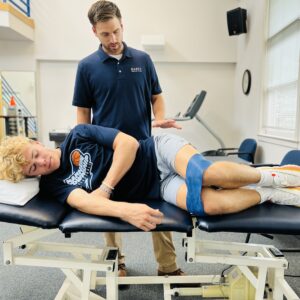 A torn meniscus in the knee is one of the most common reasons people get told they need surgery. But researchers put it to the test: they took 351 adults with a torn meniscus and some arthritis, gave half of them surgery and half of them physical therapy, and waited.
Six months later, both groups felt about the same. And only about 3 in 10 of the PT group ended up having surgery anyway. The rest — roughly 70% — got their knee back without it. (New England Journal of Medicine)
Rotator cuff tear? 3 out of 4 didn’t need surgery — and it stuck
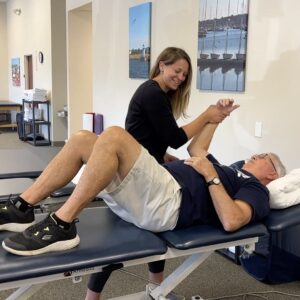 Shoulder tears feel like a for-sure surgery too. They’re usually not.
One big study followed 452 people with the wear-and-tear kind of rotator cuff tear through a physical therapy program. Two years later, about 75% still hadn’t had surgery. Here’s the part I love: they checked back ten years later, and more than 70% still hadn’t needed it. It held.
The biggest thing that pushed people toward surgery wasn’t even how bad the tear was — it was whether they believed PT could help in the first place. (MOON Shoulder Group study)
Spinal stenosis? PT worked just as well as the operation
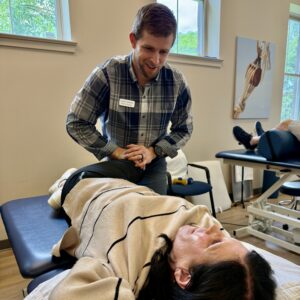 Spinal stenosis — a narrowing in the spine that causes back and leg pain as we get older — is now the number one reason people have spine surgery. It sure sounds like a surgeon’s job.
But a University of Pittsburgh study lined up physical therapy against surgery in 169 people who were already approved for the operation. Two years later, the PT group was doing just as well as the surgery group. Same improvement. The doctor who led it put it simply: too many people say yes to surgery before they’ve really tried anything else. (Annals of Internal Medicine)
Regular back pain? Starting with PT saved people a bundle
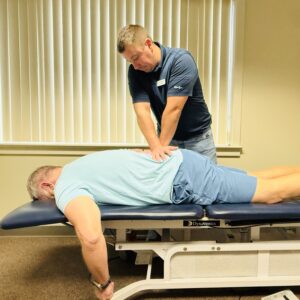 For everyday low back pain, the lesson is short: don’t rush to the MRI.
People who started with physical therapy spent about $500, on average. People who jumped straight to an MRI spent about $1,300 — and were more likely to end up in surgery and injections down the road. Over the next year, the folks who started with PT spent about 72% less overall. (Spine)
Why we push PT first
Look, surgery is sometimes the right answer, and we’ll tell you straight when it is. But every operation comes with real stuff — anesthesia, infection risk, weeks or months of getting back on your feet — and none of it is guaranteed to work. PT skips almost all of that. When it works, you’re back to your life faster.
And it does something surgery often doesn’t: it fixes the reason it hurt. Stronger muscles, better movement, cleaner habits. That’s how you keep it from coming back.
You probably don’t even need a referral
A lot of people don’t know this: in most cases you can just come see us — no referral needed. Here’s how Direct Access works in Pennsylvania. The research says people who come straight to a PT actually do a little better and spend a little less than people who wait around for a referral first. Fewer visits, less imaging, less medication.
Translation: you can start sooner. And sooner is usually when this stuff works best.
When surgery really is the answer
I’m not going to pretend surgery is never the move. Big or complicated tears, real structural damage, nerve problems that are getting worse, broken bones, or things that just haven’t improved after honest effort in therapy — those can absolutely need an operation, and our therapists will say so. And if you do need surgery, going in stronger makes the recovery easier on the other side.
Either way, you won’t be guessing. You’ll know.
The bottom line
Starting with physical therapy isn’t giving up or dragging your feet. For a whole lot of knee, back, and shoulder problems, it’s the smart first move — same result, less risk, less money. Before you book surgery, it’s worth finding out if you’re one of the many people who may not need it.
I’ll tell you the real reason I wanted to write this. I get to watch our PTs and PTAs with our patients every single day, and I adore this team. I see how much they care, how closely they listen, and how hard they work to get people back to what they love. When I say you’re in good hands here, I mean it — I see it with my own eyes.
So if a doctor mentioned surgery, come let our team take a look first. You get real one-on-one time with a therapist who knows your name, a straight answer about what’ll actually help, and a plan to get you moving again. We’ve been your Lancaster County neighbors since 2000, with six locations close to home.
Want to know what your options really are? Call the location nearest you or request a visit at hartzpt.com. No referral needed. Come see the difference.
The studies here are summarized accurately and meant as general information, not medical advice. What’s right for you depends on your situation — the best next step is always a one-on-one visit with a licensed physical therapist.
Sources
- Knee (meniscus): Katz JN, et al. Surgery versus physical therapy for a meniscal tear and osteoarthritis (METEOR trial). New England Journal of Medicine. 2013;368(18):1675–1684. Read it
- Shoulder (2-year): Kuhn JE, et al.; MOON Shoulder Group. Effectiveness of physical therapy in treating atraumatic full-thickness rotator cuff tears. Journal of Shoulder and Elbow Surgery. 2013;22(10):1371–1379. Read it
- Shoulder (10-year): Kuhn JE, et al. Ten-year outcomes of the MOON Shoulder prospective cohort. Journal of Bone and Joint Surgery. 2024. Read it
- Spine (stenosis): Delitto A, et al. Surgery versus nonsurgical treatment of lumbar spinal stenosis: a randomized trial. Annals of Internal Medicine. 2015;162(7):465–473. Read it
- Low back pain (cost): Fritz JM, Brennan GP, Hunter SJ. Physical therapy or advanced imaging as first management strategy for low back pain. Health Services Research. 2015;50(6):1927–1940. Read it
- Low back pain (early PT): Childs JD, Fritz JM, et al. Implications of early and guideline-adherent physical therapy for low back pain on utilization and costs. BMC Health Services Research. 2015;15:150. Read it
- Direct access: Ojha HA, et al. Direct access compared with referred physical therapy episodes of care: a systematic review. Physical Therapy. 2013. Read it