Outpatient Specialized Neuro PT & OT to Help You Rebuild Strength, Movement, and Independence
Support for Stroke Survivors — and the People Who Care for Them
A stroke can change daily life in an instant — but recovery doesn’t stop when you leave the hospital or inpatient rehab. Continuing physical and occupational therapy is one of the most important things you can do to maximize your improvement, independence, and safety. And no matter when your stroke happened — recent or years ago — improvement is still possible.
Our neurological PT and OT therapists help stroke survivors get back to a rewarding life. We also bring specialized expertise most outpatient clinics can’t: our Lancaster West office is home to our NeuroRehabilitation program, and our neuro team was the first in Lancaster County trained by Vivistim for hand and arm recovery. Improvement is still possible at any stage of stroke recovery, and appointments are typically available within 24–48 hours. Call us at (717) 735-8880.
Progress at every stage of recovery. We’re ready when you are.
Our Services
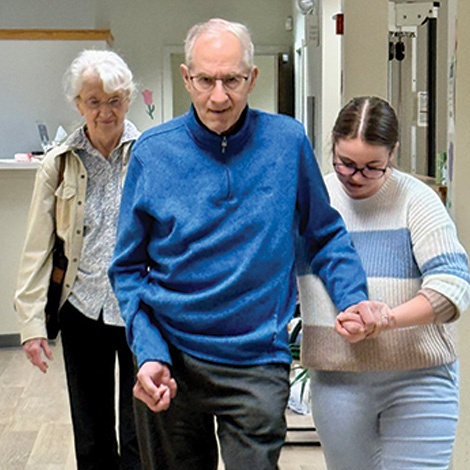
Recovery after a stroke looks different for everyone. Our specialized neuro PT and OT therapists build a customized plan for each patient to improve movement and function — and we can help determine whether durable medical equipment or orthoses (like a brace) would help, while offering guidance to prevent the complications that can follow a stroke.
Your therapist will help you with:
- Balance & stability
- Arm & leg movement
- Strength & endurance
- Transfers
- Walking & mobility
- Daily tasks & independence
Treatment May Include
- Bracing trials (AFOs) — Testing ankle-foot orthoses to find the right fit for safer, faster walking.
- Aerobic conditioning — Personalized moderate-to-high intensity training that helps the brain form new pathways to power movement and muscle activation.
- Functional Electrical Stimulation (FES) — Gentle electrical stimulation to boost muscle recruitment during training, helpful for foot drop and for movement after Botox injections.
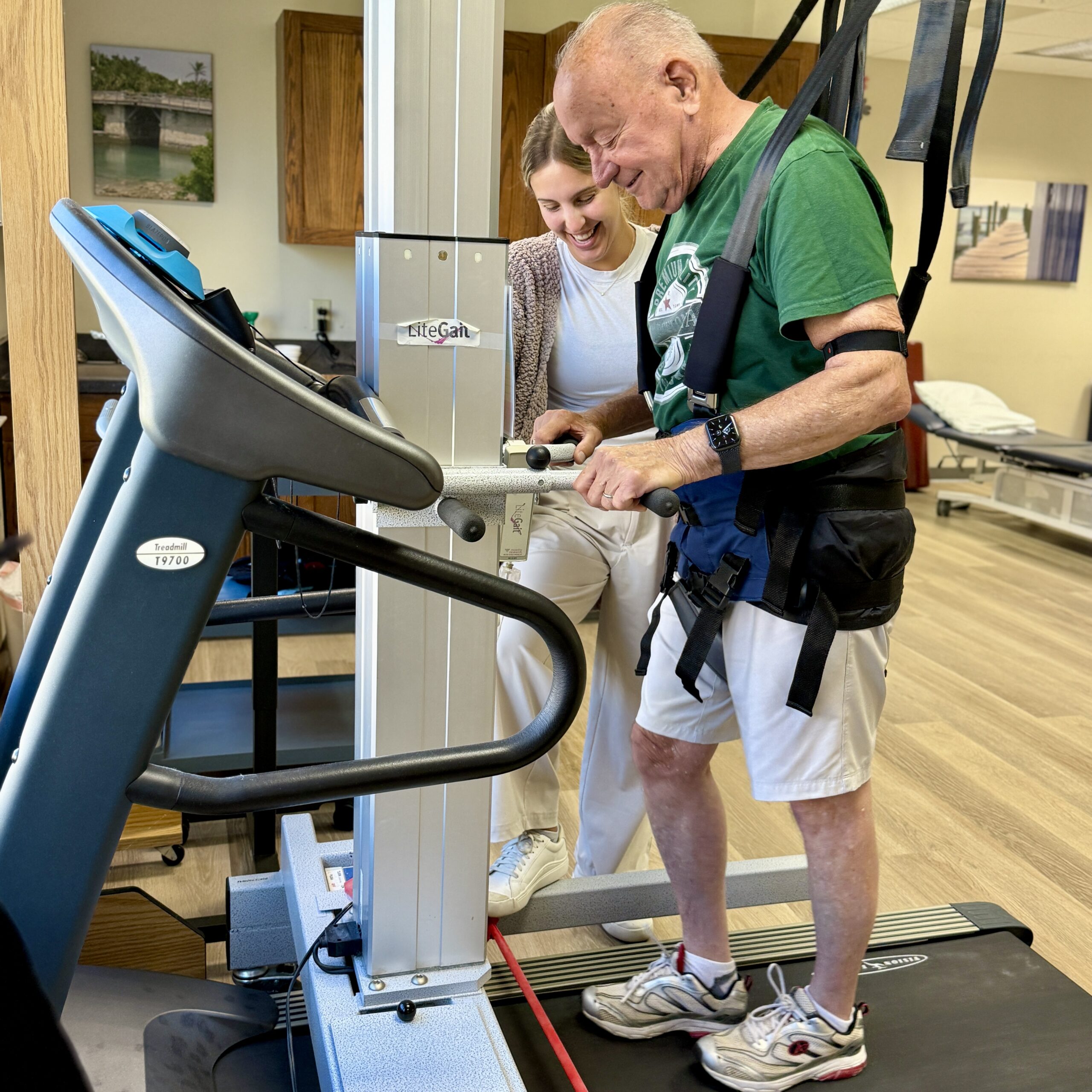
- LiteGait body-weight support — A supported system to relearn basic walking, build strength and endurance, and promote neuroplasticity (your brain’s ability to rewire).
- PNF training — Specialized techniques to improve walking and coordinate movement.
- Cueing strategies — Verbal and visual cues during exercises to sharpen balance and overall motor performance.
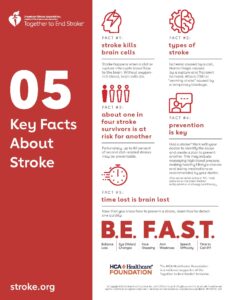
Want to understand more about stroke — common causes, warning signs, and treatments? Visit our blog.
Supporting Survivors and Caregivers Together.
Stroke recovery isn’t something one person does alone. It affects the individual, the family, and daily life at home.
At HARTZ Physical Therapy, we support stroke survivors and caregivers together — with thoughtful care, clear communication, and therapy that focuses on real-life progress.
A Breakthrough for Hand & Arm Recovery: Vivistim
Millions of ischemic stroke survivors continue to live with lasting hand or arm impairment — and many have been told their recovery is over. There is new hope.
What is Vivistim?
Vivistim is a neurostimulation device that pairs Vagus Nerve Stimulation (VNS) with your rehabilitation therapy and everyday activities. That pairing strengthens the brain connections needed to improve hand and arm function. It’s the first and only system of its kind, and it’s proven safe and effective:
- Patients gain 2–3x more hand and arm function compared to conventional rehab alone
- 98% of Vivistim users were satisfied
- FDA-approved as safe and effective for upper-extremity recovery after stroke
How does it work?
Once the system is placed by your physician and you’re cleared for rehab, it helps boost your brain’s natural neuroplasticity to help you regain hand and arm movement. During rehab exercises and at-home activities, you activate Vivistim to gently stimulate the brain through the vagus nerve. Most users don’t feel the stimulation — but they feel a noticeable improvement in hand and arm function. Think of it like building a new bridge to bypass the damaged area.
Our neuro PT and OT team are the first therapists in Lancaster County chosen and trained by Vivistim — both to evaluate whether you’re a good candidate and to guide your therapy after the stimulator is implanted.
To learn more, visit Vivistim’s website or schedule a free screening with our team below.
 It’s Not Too Late!
Many people are told that recovery only happens early on. We DON’T believe recovery runs on a deadline.
The brain and body CAN continue to adapt over time. With skilled therapy, encouragement, and consistency, meaningful improvements are often possible — even years after a stroke.
The HARTZ PT/OT Difference
- True one-on-one care
Every visit is focused, personal, and unrushed. - Specialized neuro-trained therapists
Our team works exclusively with stroke and neurological recovery. Their expertise means every exercise, every plan, and every strategy is designed for the unique needs of stroke survivors. - PT + OT, working together
We address movement and daily function — so progress carries over at home. - Care that includes caregivers
We listen, explain, and help you understand how to support progress outside the clinic. - All stages of recovery welcome
Recent strokes • long-term recovery • everything in between
What to Expect
- A one-on-one evaluation
- Clear, realistic goals you understand
- A customized plan designed around YOUR daily life and YOUR goals
- Ongoing support from a team that truly cares
Recovery is still possible — and you don’t have to do it alone.
Let’s talk about where you are and what support could look like moving forward. Call today and we can schedule you or your loved one within 24–48 hours. 717.735.8880
Real Stories of Stroke Recovery
Schedule a FREE Stroke Recovery Screening
We offer a FREE neurological PT and OT screening for stroke survivors to determine whether you’re a good candidate for therapy and/or advanced technology for neuro recovery. The screening takes about 30 minutes and includes a review of your history, an informational questionnaire, and one-on-one time with our therapists. Screenings are by appointment only — fill out the form below and one of our therapists will call you.
This screening may be a good fit for people who have had a stroke (recent or years ago) and still experience one or more of the following:
- Residual weakness on one or both sides
- Limited mobility or an inability to walk
- Cognitive changes from the stroke
- Trouble with daily tasks like bathing or dressing
- Frequent falls
- Increased weakness or a decline in function — especially following an illness, infection, or fall
FREE Stroke Rehab Screen Request
Our NeuroRehab Team:
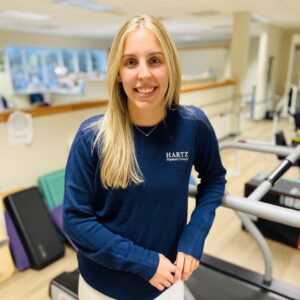 Jamie Hreniuk, DPT | Physical Therapist
jhreniuk@hartzpt.com
Jamie is a physical therapist with specialized expertise in neurologic rehabilitation, and she has a heartfelt focus on helping people recover after a stroke. She cares for patients of all ages and has extensive experience supporting stroke survivors as they work toward regaining strength, independence, and confidence.
Jamie creates personalized treatment plans tailored to each individual’s needs, often incorporating advanced rehab technologies such as body weight support systems and functional electrical stimulation. She values collaboration, working closely with families and interdisciplinary teams to ensure safe transitions and meaningful progress at every stage of the recovery journey.
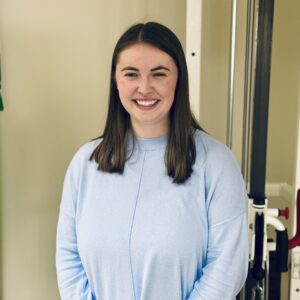
Kailey Kelly, DPT | Physical Therapist
kkelly@hartzpt.com
Kailey is passionate about stroke rehabilitation and helping survivors regain independence and confidence. She has extensive experience providing one-on-one care for patients with a wide range of neurologic and vestibular conditions, including strokes.
Her approach is rooted in personalized, evidence-based care. Collaboration is central to Kailey’s practice: she partners closely with occupational therapists, and other professionals to provide comprehensive stroke care. Above all, Kailey is dedicated to walking alongside her patients as they work toward meaningful recovery and achieving their goals.
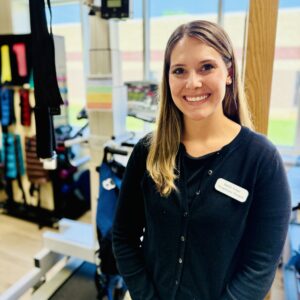 Emily Beck, OTR/L | Occupational Therapist
ebeck@hartzpt.com
As an occupational therapist, Emily is passionate about helping stroke survivors regain independence in their daily lives. She provides one-on-one, personalized care to support recovery of essential skills—from self-care and home activities to returning to work, hobbies, and community participation.
Her practice is rooted in evidence-based techniques and innovative tools, including task-specific training, upper extremity rehabilitation technologies, and advanced strategies for addressing vision and cognitive challenges after stroke. Collaboration is a key part of Emily’s approach—she works closely with our physical therapists, and families to create seamless, well-rounded care plans. Dedicated and compassionate, Emily empowers her patients to achieve meaningful progress and reclaim confidence in everyday life.
Frequently Asked Questions
Download the American Stroke Association’s Awareness Information Kit.