
Outpatient Neurological Physical Therapy
Part of the HARTZNeuroRehabilitation Program
One Program, Complete Care
Our neurological rehabilitation program brings physical therapy and occupational therapy together under one roof — a complete circle of care for people recovering from stroke, brain injury, Parkinson’s, MS, and other neurological conditions. This page covers our neuro physical therapy services; for the daily-living side of recovery, visit Neurological Occupational Therapy →
Movement Is Where Recovery Begins
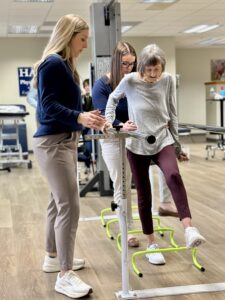
Neurological conditions have a way of making movement feel harder — and when moving gets harder, it’s natural to do less of it. But here’s the thing we remind every patient: when we don’t use it, we lose it. The good news is that the nervous system is remarkably adaptable, and skilled, targeted physical therapy is one of the most powerful ways to help your brain and body build new pathways and relearn how to move.
Our neuro physical therapists have years of experience with a wide range of neurological diagnoses, and they bring real passion and creativity to the clinic — the kind that keeps patients progressing even with the most complex conditions. Every plan is one-on-one, built around your goals, and delivered in a calm, encouraging environment.
Why Choose Us? 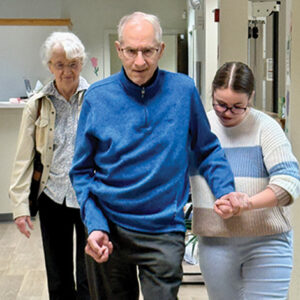
- Individualized, goal-oriented treatment plans
- One-on-one sessions in a calm, supportive environment
- State-of-the-art equipment and progressive therapy techniques
- Empowering education and home exercise programs
- Support for both you & your caregivers
- Warm water aquatic therapy to improve mobility, reduce pain, and enhance balance.
Conditions We Treat
Our neurological physical therapy program specializes in helping patients living with:
- Stroke (Cerebral Vascular Accident CVA)
- Traumatic brain injury (TBI)
- Amputation & Limb Loss
- Spinal cord injury (SCI)
- Parkinson’s Disease
- Multiple Sclerosis
- Mild Brain Injury/Concussion
- Guillain-Barre Syndrome
- Peripheral Neuropathy
- Vestibular & Balance Disorders
- Dystonia and Cerebella Ataxia
Recovery Is About More Than Movement
While our neuro PT team focuses on mobility, balance, and getting you back on your feet, our neuro occupational therapists handle the daily-life side of recovery — dressing, cooking, handwriting, memory and thinking skills, adaptive equipment, and even return-to-driving evaluations. Many patients benefit from both, working side by side in one coordinated circle of care. Explore Neurological Occupational Therapy →
Physical Therapy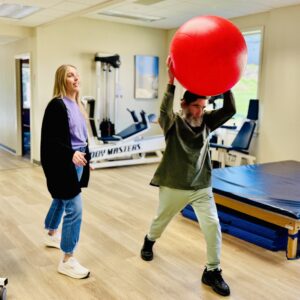
People with neurological disorders often stop doing activities they love because it is more challenging to move, but it’s important to remember when we don’t use it….we lose it! Our PT’s have years of experience treating patients with a variety of neurological conditions. Their passion and creativity in the clinic ensure progress even with the most complicated diagnoses.
How Neuro PT Can Help
Our team works with you to make real, functional progress on things like:
- Improving posture and balance
- Gait training for safer, steadier walking
- Regaining motor control in the arms and legs
- Advancing stability and coordination
- Building endurance and reducing fatigue
- Practicing safe transfers
- Trunk control and core stabilization
- Decreasing chronic pain and neuropathy
- Vestibular training
- Increasing Endurance
- Reducing Fatigue
- Equipment evaluation
Treatment May Include
We combine hands-on expertise with progressive, evidence-based technology to drive neuroplasticity — your brain’s ability to rewire and relearn:
- LiteGait body-weight support to relearn basic walking skills safely, build strength and endurance, and promote neuroplasticity — even in the earliest stages of recovery.
- Functional Electrical Stimulation (FES) to boost muscle recruitment during training, which can improve walking with foot drop and movement following Botox injections.
- AFO trials to find the right bracing to improve your walking speed and safety.
Moderate-to-high-intensity aerobic training that mobilizes the brain’s neural mechanisms to create new pathways for movement and muscle activation. - PNF training to improve gait and coordinate movement patterns.
- External verbal and visual cueing during exercises to sharpen balance and overall motor performance.
Aquatic Therapy
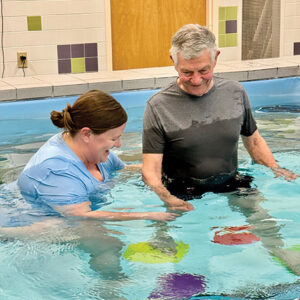 Warm water is one of our favorite tools for neurological recovery. Its natural buoyancy reduces the pull of gravity, so you can move more freely, with less pain and less fear of falling — an ideal environment to rebuild strength, balance, coordination, and confidence. Your aquatic program is always overseen and progressed by your physical therapist, with one patient in the pool at a time and water kept at a comfortable 90–92°F. Learn more about Aquatic Therapy →
Regain Control. Restore Confidence.
At HARTZ NeuroRehabilitation we believe in the body’s potential to adapt, improve, and thrive. With the right therapy, support, and encouragement, meaningful recovery is possible — no matter where you’re starting from.
You may not even need a referral. Thanks to direct access in Pennsylvania, many patients can begin physical therapy without a physician’s referral. Take us up on a free phone consultation — no obligation — and we’ll help you figure out the right next step. We can often schedule new patients within 24 hours.
Our Therapists:
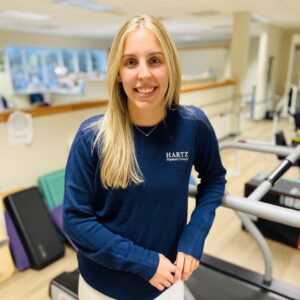 Jamie Hreniuk, DPT, is a physical therapist with a strong clinical focus in neurologic rehabilitation, working with patients across the lifespan—from adolescents to older adults. Her experience includes treating complex neurologic conditions such as spinal cord injuries (including ventilator-dependent cases), strokes, brain injuries, Parkinson’s disease, Multiple Sclerosis, Guillain-Barré syndrome, and ALS. Jamie specializes in creating individualized treatment plans that incorporate cutting-edge rehab technologies like body weight support systems, functional electrical stimulation, and virtual reality. She collaborates closely with interdisciplinary teams and families to ensure safe transitions and meaningful recovery at every stage of care.
You may reach Jamie at 717.735.8880 or jhreniuk@hartzpt.com.
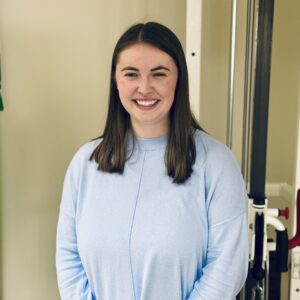 Kailey Kelly, DPT is passionate about neuro and vestibular rehabilitation. She has specialized in one-on-one treatment of patients with a wide range of neurological and vestibular conditions—from stroke and traumatic brain injury to post-concussion recovery and balance disorders.
She takes pride in providing personalized, evidence-based care using tools like High Intensity Gait Training and advanced vestibular diagnostics, including self-developed 3D models. Collaboration is key to her approach—she regularly works with occupational therapists, speech-language pathologists, and other healthcare professionals to ensure the best outcomes for her patients. Kailey is dedicated to helping her patients achieve their goals.
You may reach Kailey at 717.735.8880 or kkelly@hartzpt.com.
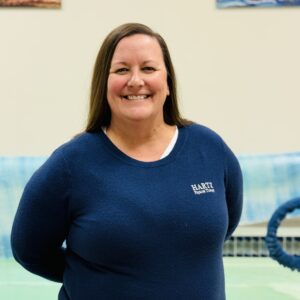 Wendy Enck, PTA & our Aquatics Director focuses 1-on-1 with our aquatic therapy patients. Your aquatic rehabilitation program will always be overseen and progressed by your physical therapist, and each aquatic therapy appointment is tailored to meet the patients’ unique symptom presentation allowing for optimal progression. One patient is scheduled in the pool area at a time and monitored throughout their entire visit. With a maintained water temperature of 90-92 degrees and private changing areas with showers and towels provided, patients will be comfortable throughout their visit.
You may reach Wendy at 717.735.8880 or wenck@hartzpt.com.